
Jackson County Arrest Warrants Explained
An arrest warrant is a court order. It directs a peace officer to take a named person into custody. In Jackson County, that order comes from the Iowa District Court in Judicial District 7, and a judicial magistrate usually makes the call. The magistrate hears the complaint, weighs the legal basis, and signs the warrant if one is warranted. The Sheriff never creates it, even when a deputy investigated the case. The court issues; law enforcement executes. The standard is probable cause, meaning facts that support a reasonable belief an offense occurred and this person was involved. That is a threshold for legal process. It is not a verdict. Iowa criminal rules put review in the hands of a judicial officer, so a warrant record shows an accusation plus an order to act. Later docket entries may still change the case in Jackson County.
Jackson County Warrant Authority
Iowa Code Chapter 804 supplies the core arrest-warrant rules used in Jackson County. Section 804.2 covers form and contents. Section 804.3 covers a bail endorsement. The current Iowa criminal rules also govern the complaint, judicial review, issuance, and the prompt appearance that follows an arrest. A magistrate's role matters in this rural county. Iowa Code section 602.6405 gives judicial magistrates power to hear complaints, issue warrants, order arrests, and take bail within the unified court system. That is not a separate local court. The case stays inside the Iowa District Court structure, and the Jackson County Clerk of the Iowa District Court keeps the local record.
Inside a Jackson County Arrest Warrant
Iowa law sets out what a warrant must contain. Those parts tell an officer whom to arrest, why the order exists, and which judicial authority approved it. A public docket in Jackson County may show only an event or a short description, especially before service. So do not expect every field to appear on a public screen. The paper holds more than the display.
| Person | The defendant's name, or an unknown-name description when the law permits it. |
|---|---|
| Offense | The alleged offense for which the arrest is ordered. |
| Direction | An order addressed to a peace officer to make the arrest. |
| Place and Date | The county or city information and date required by the warrant form. |
| Judicial Approval | The signature showing that a judge or magistrate issued the order. |
| Bail | An endorsement may address bail, but any amount or condition is case-specific. |
A warrant number follows no reliable generic pattern, so skip guesswork. If a Case ID shows up, copy the exact identifier from the person's own paperwork or Iowa Courts Online. That gives the Jackson County Clerk the best reference for a warrant lookup.
Jackson County Warrant Access Limits
The Iowa Judicial Branch access chart treats outstanding arrest-warrant matters, and related applications, orders, and information, as restricted at key pre-service stages. What the public sees can change after service, a return, or an initial appearance. A missing document therefore does not prove that no Jackson County arrest warrant exists. Keep a case event separate from the affidavit behind it too. One may be visible while the other is not. Juvenile material follows its own confidentiality rule under Iowa Code section 232.147, so adult search steps should never be assumed to expose a juvenile matter.
Key point: A clean public search is a starting result, not official clearance of a Jackson County arrest warrant.
Serving Arrest Warrants in Jackson County
Iowa Code section 804.6 places execution with a peace officer. In Jackson County that may mean the Sheriff's Office or a city police department, depending on the facts and agency assignment. There is no way to guess which officer will act, when service will occur, or where contact will happen. The offices publish no dedicated local warrant unit or surrender calendar. Section 804.4 makes an Iowa arrest warrant servable in any Iowa county. A Jackson County order does not fade at the county line. After arrest, court procedure controls the first appearance and any release terms. The Sheriff handles custody and operational questions. The Clerk holds the district-court docket and answers court-record questions. Each office has its lane.
Check Jackson County Arrest Warrants
Jackson County publishes no official searchable arrest-warrant roster. Several channels work best, since each serves a different purpose.
- Use Iowa Courts Online with an exact Case ID, citation number, name, or date of birth. Review Jackson County, case type, docket, bond, and event context.
- Call the Jackson County Clerk of the Iowa District Court at 563-652-4946 for a court-record question. The published email is countyclerk.jackson@iowacourts.gov.
- Call the Jackson County Sheriff's Office at 563-652-3312 for a law-enforcement record or service question. Dispatch, 563-652-2468, is a different function; emergencies go to 911.
- Submit a focused Sheriff records request when a copy of an arrest record or report is needed. That written process is not an urgent status check.
Iowa Courts Online can take one business day to show new entries. The state's IOWA System serves criminal-justice agencies only, with no public self-service login. Those limits make direct confirmation vital for any Jackson County warrant check.
Comparing Jackson County Arrest Process
Everyday speech blends three distinct court actions together. Their legal effects differ, so a sound response to a Jackson County matter starts with naming the exact docket event.
| Process | Purpose | Response |
|---|---|---|
| Arrest warrant | Authorizes custody based on a judicial finding of probable cause. | Confirm the order, seek legal advice, and learn the case-specific surrender and release steps. |
| Summons | Directs a person to appear without first ordering arrest. | Attend by the stated date and follow the court notice. |
| Bench warrant | Commonly relates to a missed appearance or failure to comply with a court duty. | Ask the Clerk or counsel what appearance, motion, or bond the court requires. |
A search warrant is different again. Iowa Code Chapter 808 governs authority to search a place or property, not a public list of people facing arrest. Electronic search warrants used by Iowa courts are not a Jackson County warrant lookup, and treating them as one leads nowhere.
Jackson County Arrest Record Requests
If you want an arrest record from the Jackson County Sheriff, start with the Jackson County Sheriff records page. It lays out the county's Iowa Code Chapter 22 request route and offers a form covering arrest records, police reports, accident reports, photographs, and video. Fill in the date and time, the location, the JCSO case number if you have it, and a precise description of what you need. Staff may charge permitted copy, delivery, and review costs. The statute page linked there shows the public-records law behind the request route.
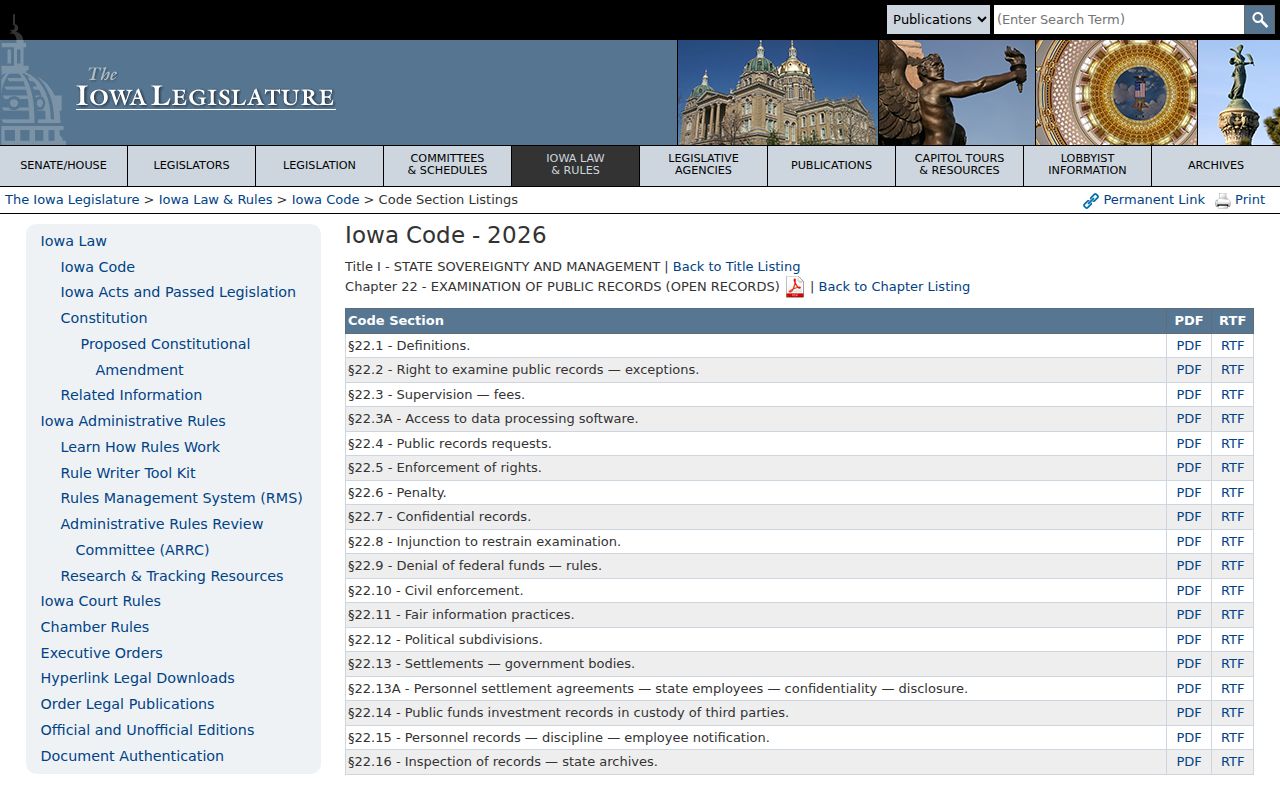
The public-records law has exceptions. Jackson County staff can withhold or redact material tied to an ongoing investigation or protected criminal-identification files. Keep in mind, too, that a Sheriff's arrest record is not the same thing as the court's arrest-warrant paperwork. Ask the Clerk for the court file and the Sheriff for its own operational records.
If an Arrest Warrant Names You
Gather your paperwork first. Keep any citation, notice, case number, or message about the matter. Look up the case through the official court portal, then confirm the warrant's status with the Clerk of Court or an attorney in Jackson County. Ask what has to happen before the warrant is recalled or satisfied, because a voluntary appearance, surrender arrangements, bail, or a motion to recall or quash each follow different rules. "Quash" simply means asking the court to set the warrant aside, and only the issuing court can decide that request. Do not count on the county's public pages promising a walk-in surrender slot, same-day release, or one universal bond amount. Even posting money, paying an older fine, or getting a receipt does not by itself prove the arrest order has been recalled. Whatever you do, check the docket again afterward to verify where the case stands.
Important: Confirm a Jackson County arrest warrant with the court or counsel before travel; no official local page promises a same-day surrender process.
Jackson County Warrant Scam Check
Scammers have worked this angle. In 2026 the Iowa Judicial Branch warned about callers claiming an arrest is imminent unless you pay right away. No court demands gift cards, bitcoin, wire transfers, Social Security numbers, or payment through a caller's link, and law enforcement does not collect court fines. Hang up. Call the Clerk yourself, using a number you look up, or use an official Iowa Courts address. A real Jackson County warrant may indeed require action, but urgency is never a reason to trust an unverified caller. For the bigger picture, the Jackson County warrant records overview separates court confirmation, legal advice, surrender planning, and bond questions, and those steps are best kept distinct.
Jackson County Arrest Status Changes
A warrant record has a life cycle. The court issues the order, an agency may receive it for service, an officer may execute it, and the court may later receive a return or hold an initial appearance. A court can also recall an order at any point. What you can see changes across those stages, since Iowa's access chart treats outstanding, unserved papers differently from later records, so a dated printout cannot settle today's status. Write down when you checked each source and which office gave you each answer. Ask the Jackson County Clerk about the docket and the Sheriff about its own operational record. If the answers seem to conflict, give the exact Case ID and ask what date each status reflects. Separate offices can hold related but nonidentical records, and that method respects the difference.